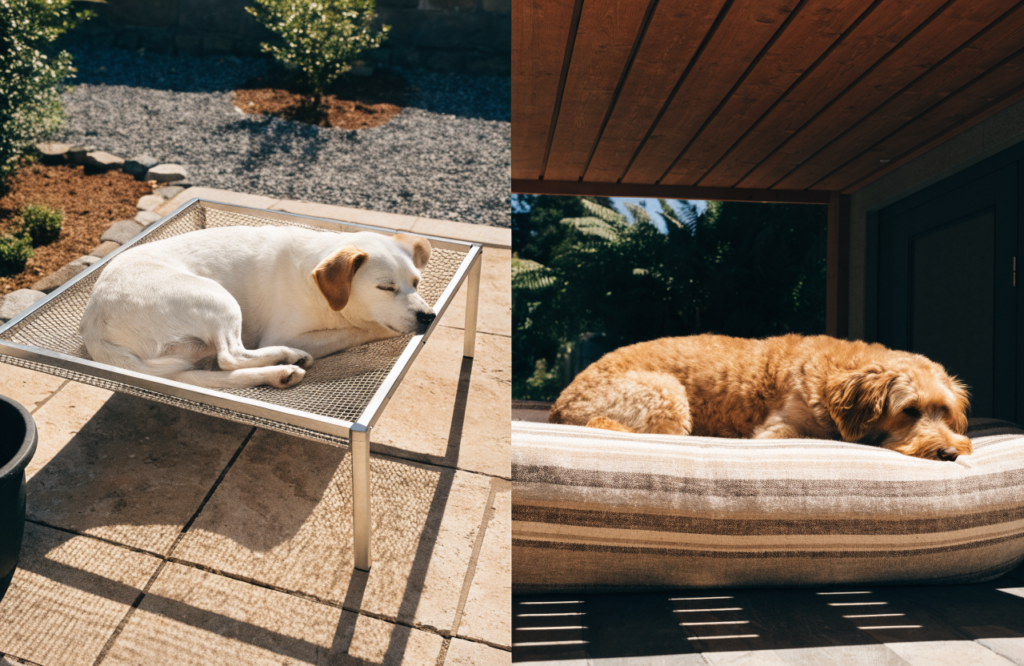
An outdoor dog bed has one job that an indoor bed does not: stay usable after rain, dew, dirt, and sun. The right choice is almost always decided by location, not by how soft the listing photo looks. A covered porch can support a cushioned pad with a sealed liner. An open patio, yard, or kennel run is better served by a raised mesh cot that drains and dries. Match the bed to the surface and the weather, then size it to how the dog actually lies down.
A bed is not a substitute for shade, water, or bringing a dog inside when the temperature turns unsafe. It only keeps the resting surface cleaner, cooler, or drier than bare concrete, wood, or wet grass.
Match the bed to the spot, not the product photo
Most outdoor beds fail because they were bought for a use the construction cannot handle.
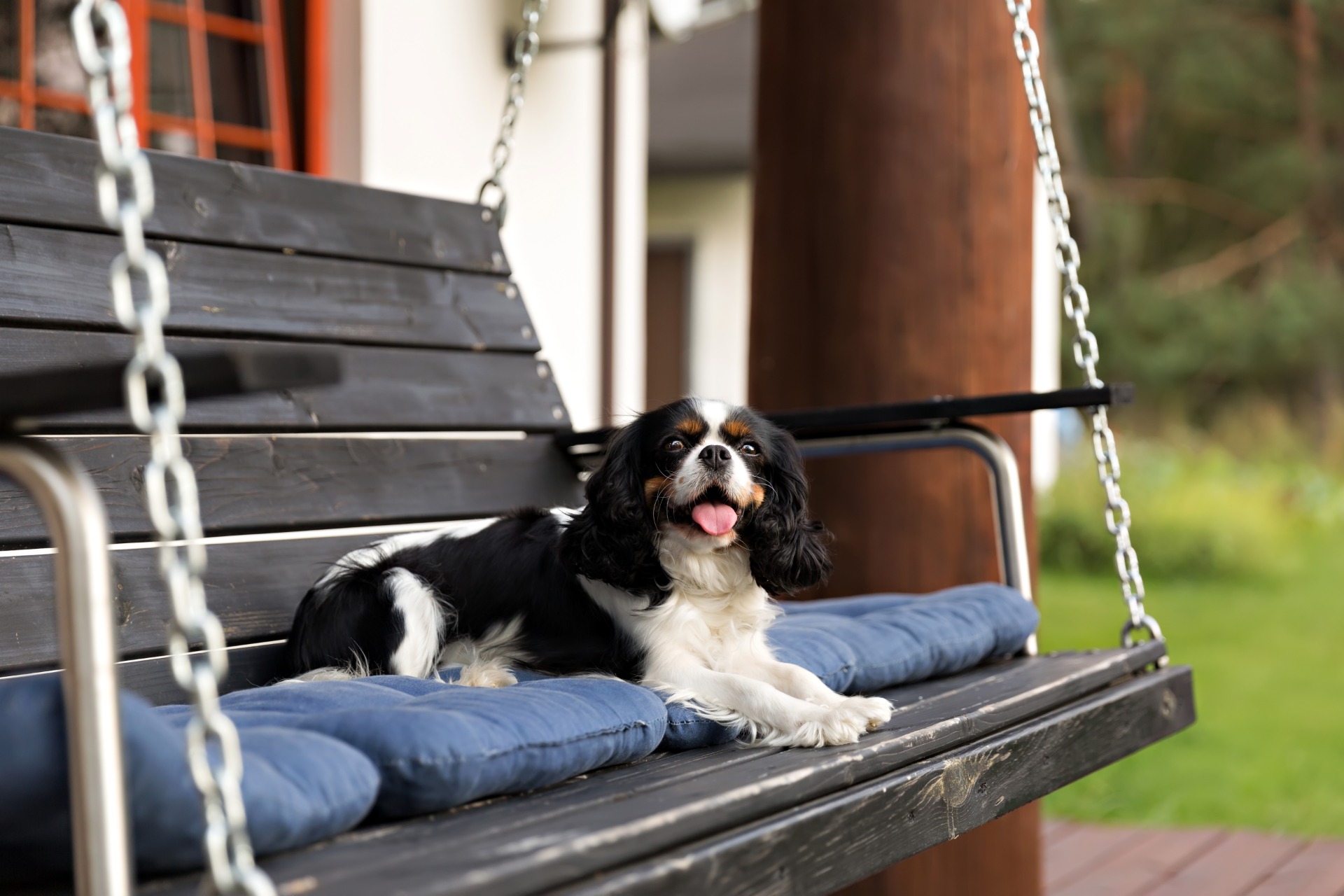
- Covered porch or patio. Rain rarely hits the bed, but dew, muddy paws, and ground moisture still do. A raised cot works well. A foam pad can also work if the cover comes off, the foam has a waterproof liner, and the bed is not left sitting in a damp corner.
- Open deck, yard, or kennel run. Water will reach the bed from above and from below. Mesh that drains through, on a frame that does not rust, is the safer default. Solid foam left in the weather holds water in the core and can smell or mildew within days.
- Travel, camping, or a bed that moves. Weight and setup matter more than cushion depth. A folding cot with a rust-resistant frame is easier to dry at the end of the day than a thick pad.
- Cold-season use. Mesh cools a dog. It does not insulate. Below freezing, or any time the dog needs to conserve heat, a dry, nestable bed inside a sheltered space matters more than a cooling cot.
Veterinary guidance follows the same split. Warm climates need airflow and shade. Cold climates need insulation and a dry surface. Places with both seasons often need two setups, or a cot with a removable shade cover that can come off when the weather changes.
A canopy helps only if it actually covers the sleeping surface when the sun is high. A narrow roof that leaves half the bed exposed does little in midday heat.
Raised cot or ground cushion: the real tradeoff
These are different tools, not ranked versions of the same product.
| Raised mesh cot | Cushioned outdoor pad | |
|---|---|---|
| Best location | Open patio, yard, kennel, hot weather | Covered porch, crate, cold or joint-support needs |
| What happens in rain | Water passes through the mesh | Cover may shed a splash; seams and zippers eventually leak |
| Drying time | Often within an hour after rain stops | Hours to days if foam gets wet |
| Heat | Air moves under and through the bed | Foam can hold heat unless it is egg-crate or gel-style |
| Joint support | Firm, even support; little sink | Thicker padding for seniors and thin-coated dogs |
| Main failure | Sag, chew holes, rust at joints | Mold in the core, flattened fill, chewed zipper |
Elevated beds keep the dog off hot or damp ground and are a common recommendation for outdoor and travel use because airflow and joint support come from the same design. The tradeoff is firmness. A heavy dog on cheap mesh will hammock in the middle. A senior dog with sore hips may prefer a thicker pad on a covered porch, or a cot low enough to step onto without a jump.
Ground clearance of roughly 7 inches is a useful minimum on open ground. It lets air move and keeps the fabric out of puddles. Shorter legs are better for small, short-legged, or arthritic dogs. Height is only useful if the dog can get on and off without slipping.
Materials that survive weather, and the labels that do not
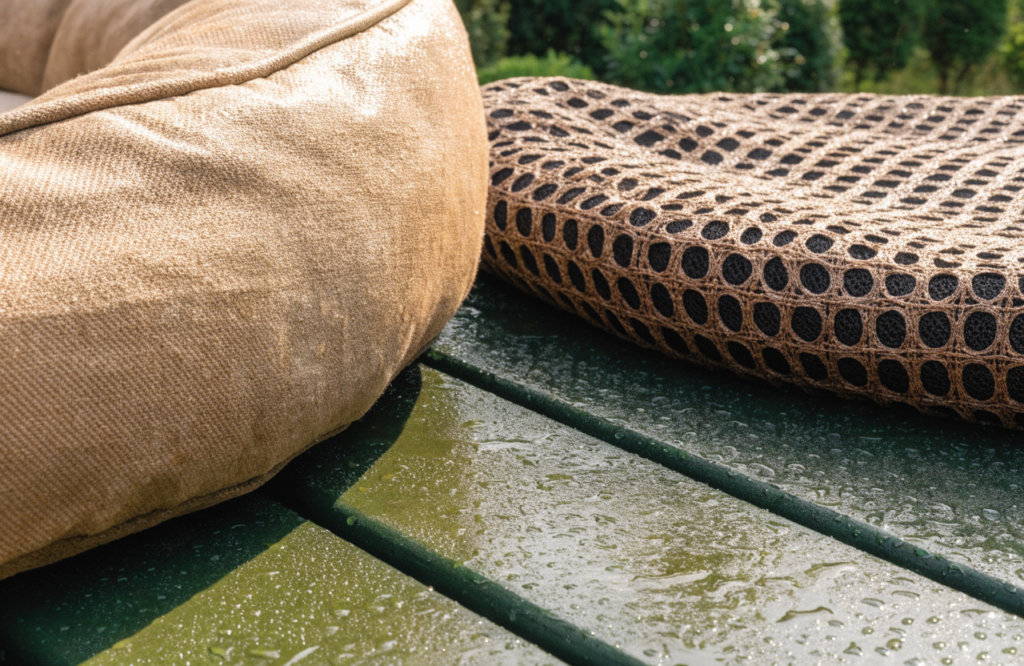
“Waterproof” on a product page often means water-resistant. The difference matters.
- Water-repellent sheds a light splash, the way a jacket with a spray finish does.
- Water-resistant delays soaking for a while.
- Waterproof, in a useful sense, means a sealed barrier such as a bonded liner, with seams that do not open a path to the foam.
Outdoor fabrics that hold up are usually polyester or polyethylene, often listed as Oxford cloth in the 600D range or higher, or a coated mesh such as textilene, Teslin, or HDPE. Higher denier means thicker yarn and better resistance to claws. UV-treated fabric fades and cracks more slowly in full sun. Untreated polyester can fail in a single season of direct exposure.
Frame choice is the other half of durability. Powder-coated steel is the practical minimum. Bare or thinly painted steel rusts where the coating chips at the joints. Aluminum resists rust and stays lighter for travel, but check the stated weight limit and whether the frame has crossbars, not just four thin legs. Plastic frames can crack in cold weather under a heavy dog.
Foam belongs outdoors only with a liner between cover and core. Open foam acts like a sponge once moisture gets past the fabric. Polyester fill clumps after it gets wet. If the dog needs cushioning outside, the cover should come off for washing, and the foam should never be the part you hose down and leave in the shade to “dry.”
Size it to the sleeping shape, not the weight chart
Weight limits tell you whether the frame will hold. They do not tell you whether the dog fits.
Measure from nose to the base of the tail while the dog is stretched on its side. Add at least 6 to 8 inches. Then watch how the dog actually sleeps. A sprawler needs width as well as length, so shoulders, hips, and legs stay on the surface. A curled sleeper can use a shorter bed, but still needs room to turn.
A rough starting point, not a breed rule:
- Under about 25 pounds: a surface around 30 to 36 inches long is often enough.
- About 25 to 60 pounds: look at 42 to 48 inches.
- Over 60 pounds: start at about 48 to 50 inches, and go longer for dogs that sprawl.
- Giant breeds: 55 inches or more if they stretch out.
If you are between sizes, size up, then check the usable surface. Listed dimensions sometimes include the frame rails, which the dog cannot lie on. Bolsters steal space. A dog that hangs elbows off the edge will stop using the bed.
Heat, cold, and the limits of any bed
A cooling cot does not make a hot afternoon safe. Veterinary sources note that temperatures above 70°F, especially with humidity, raise the risk of heat-related illness, and that time outside should be short once the air is in the 80s or 90s unless the dog has shade, cool air, and fresh water. Flat-faced breeds, seniors, overweight dogs, and thick-coated dogs overheat sooner. Asphalt and concrete can be far hotter than the air, so a bed on a shaded deck is not the same as a bed in full sun on a patio.
On the cold side, outdoor housing standards used for regulated facilities require a way to conserve heat below 50°F, and extra dry bedding that a dog can nest into below 35°F. A mesh cot does the opposite of nesting. Arctic breeds are not exempt from cold, wind, or wet coats. If the dog will be outside in cold weather, the bed needs to be dry, sheltered from wind, and thick enough to keep the body off frozen ground. Straw or a dry blanket inside a proper shelter does that job better than a patio cot.
Whatever the season, the bed does not replace continuous access to water.
Cleaning that prevents the smell cycle
Outdoor beds get dirty faster than indoor ones. Veterinarians generally suggest washing covers about every two weeks, and more often after mud, swimming, illness, or skin problems. The American Kennel Club makes the same point in practical terms: a dog that rolls in wet dirt needs more frequent cleaning than a dog that stays tidy.
A workable routine:
- Shake off hair, sand, and dried mud before any wash.
- Remove the cover. Wash it on the cycle the label allows, with a pet-safe detergent. Skip fabric softener, which coats water-resistant finishes.
- Spot-clean foam. Do not soak it. A light steam or a baking-soda rest, then a thorough vacuum, is safer than a hose.
- Hose mesh cots and scrub with mild detergent. Rinse well.
- Dry every part completely before the dog uses it again. A cover that feels dry can still hide damp fill.
Moisture left in foam is the usual path to mildew and odor. The same problem can mark a wood porch if a warm dog lies on a bed in one spot all season and air never reaches the boards. Moving the bed, or raising it, breaks that seal.
Why dogs destroy outdoor beds, and what actually slows that down
Chewing is the failure product photos do not show. Mesh edges, exposed zippers, and bolsters are the first targets. A hidden zipper helps on a cushion. A tightly tensioned, coated mesh such as textilene, or a bed sold specifically with chew-resistant edge wraps and a metal or rigid resin frame, lasts longer with a determined chewer than a thin polyester sling. Nothing is chew-proof if the dog is left with it for hours and already treats beds as a toy.
Other common failures:
- Sagging. The fabric was light, or the dog is over the weight the surface was tensioned for. Crossbars and a higher-denier mesh delay this.
- Rust at the feet. The bed sits in wet grass and the coating is thin. Wipe legs at the end of the wet season, or choose aluminum.
- The dog ignores it. The surface is too hot, too high, too narrow, or less comfortable than the deck. Greyhounds and other short-coated dogs sometimes prefer a hard surface. Putting the bed where the dog already lies, in the shade, beats moving the dog to a bed in the sun.
- Sliding. Smooth decking needs a non-slip foot or a mat under the frame.
A simple buying order
Decide in this sequence so the listing details do not take over.
- Name the surface and the weather: covered porch, open patio, kennel, or travel.
- Pick cot or cushion from that, not from the photo.
- Confirm frame and fabric: coated steel or aluminum, UV-stable mesh or a heavy outdoor weave, liner if there is foam.
- Measure the dog stretched out and add several inches. Check step height for seniors.
- Require a cleaning path you will actually use: hose-off mesh, or a cover that leaves the foam protected.
- Add shade and water as part of the setup, not as features of the bed.
Price follows construction. A light folding cot is enough for occasional porch use. A heavier frame and coated mesh cost more because they are built for daily weather and claws. A thick orthopedic pad only earns that price if it stays dry.
Frequently asked questions
Can an outdoor dog bed stay out in the rain?
A mesh cot with a coated frame can. Water goes through the fabric, and the surface is usually usable again once it stops dripping. A foam pad should not live in open rain. Even a “waterproof” cover leaks at zippers and seams over time, and wet foam is difficult to dry.
Do senior dogs need a raised bed or a thick pad?
Both can help, for different reasons. A low cot keeps joints off hard ground and can make standing up easier if the step is small. A thicker pad spreads pressure for dogs that lie in one position for a long time. Very sore or neurologic dogs need the lowest entry the setup allows. Bedding does not treat joint disease; a veterinarian should guide that part.
Is a cooling bed safe in summer?
It is safer than hot concrete, not safe by itself. Use it in shade, with water nearby, and limit time outside when the air is hot or humid. Flat-faced dogs need stricter limits than a short walk on a cool morning would suggest.
How do I stop the bed from smelling?
Dry it fully after every wash or rain, wash the cover on a schedule, and do not let damp foam sit in a cover. Vinegar in the wash can cut odor if the care label allows it. If the smell is in the foam and will not leave after drying, the core is finished.